Investing in solar panel installation is one of the smartest decisions homeowners and businesses can make to reduce electricity costs and embrace clean energy. An expertly designed solar system offers long-term energy reliability, boosts property value, and helps reduce your carbon footprint. However, the success of any solar panel installation depends on careful planning, quality components, and expert execution.
Unfortunately, many people make avoidable mistakes during the planning or installation process. These errors can reduce energy production, increase maintenance costs, and shorten the lifespan of the system. Understanding these common pitfalls will help you make informed decisions and maximize your return on investment.
In this guide, we explore the most frequent solar panel installation mistakes and provide practical tips to avoid them.
1. Choosing the Wrong System Size
One of the biggest mistakes is installing a system that does not match your energy needs. An undersized system may not generate enough electricity, while an oversized one can increase upfront costs without delivering proportional benefits.
Before beginning a solar panel installation, review your electricity bills, calculate your average consumption, and work with professionals who can recommend the appropriate capacity for your property.
2. Ignoring Roof Condition
Installing solar panels on an aging or damaged roof can create problems in the future. If repairs become necessary after installation, the panels may need to be removed and reinstalled, adding unnecessary expense.
Always inspect and repair the roof before starting a solar panel installation. A structurally sound roof provides a stable foundation and helps ensure long-term system performance.
3. Poor Panel Placement
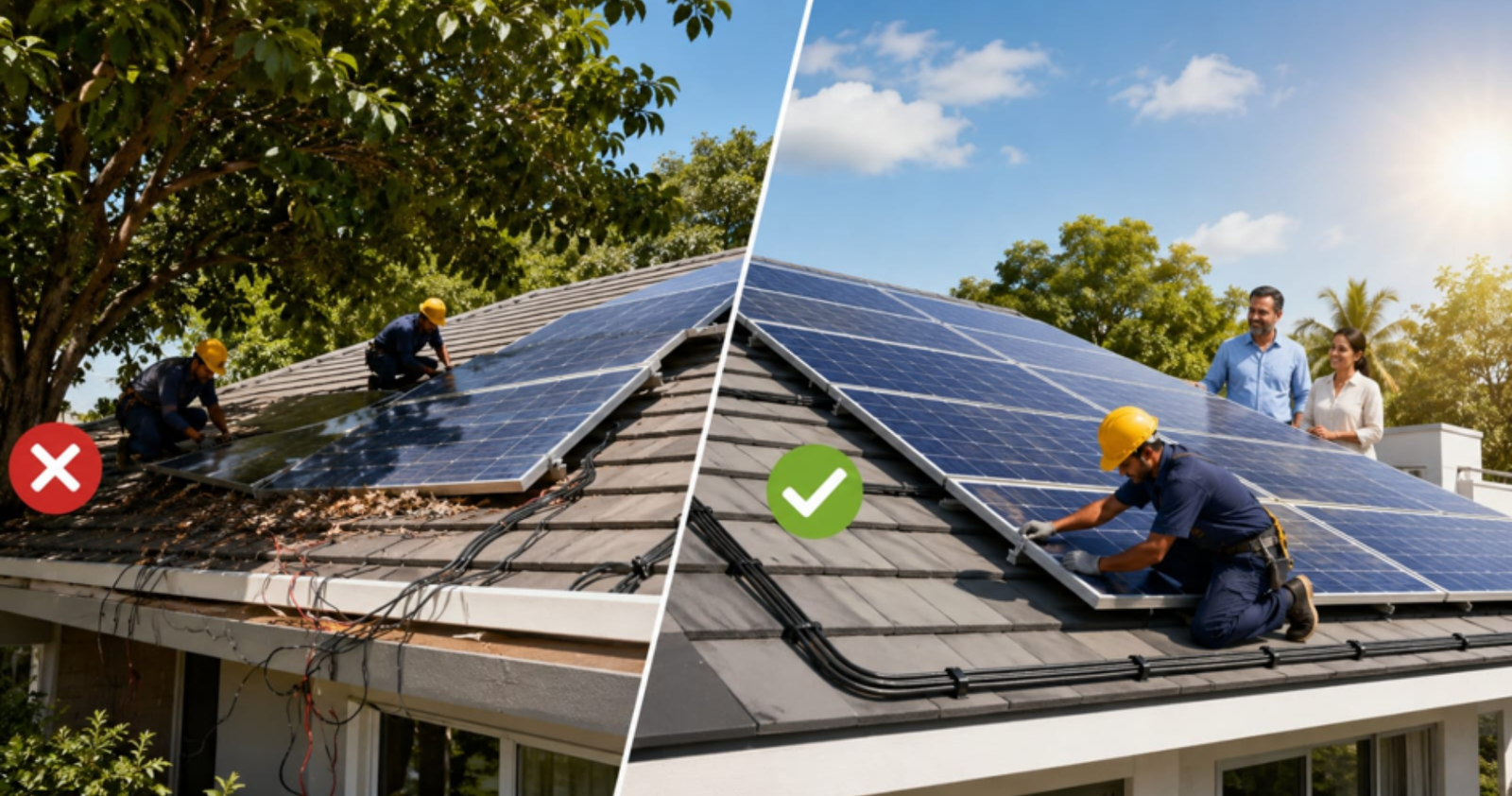
The location and orientation of solar panels directly affect energy production. Panels installed in shaded areas or at incorrect angles may generate significantly less electricity than expected.
For an efficient solar panel installation, choose locations with maximum sunlight exposure and minimal shading from trees, neighboring buildings, or other obstacles.
4. Selecting Low-Quality Equipment
Trying to save money by purchasing inexpensive components can lead to poor performance and higher maintenance costs. Inferior panels, inverters, or mounting structures may degrade faster and reduce system efficiency.
Choose reputable manufacturers and experienced installers who prioritize quality during every solar panel installation project. Durable equipment often provides better warranties and long-term reliability.
5. Hiring Inexperienced Installers
Solar technology requires technical expertise. Poor workmanship can result in loose wiring, incorrect mounting, safety hazards, and reduced energy generation.
Hiring trained professionals for your solar panel installation helps ensure proper design, compliance with local standards, and dependable performance over the life of the system.
6. Overlooking Structural Load Capacity
Solar systems add weight to rooftops. Failing to verify whether the structure can safely support that load may create safety concerns.
Before beginning a solar panel installation, request a structural assessment to confirm that the roof is capable of supporting the equipment under local weather conditions.
7. Ignoring Future Shading
A location that receives full sunlight today may become shaded in the future because of growing trees or nearby construction.
When planning a solar panel installation, consider long-term environmental changes and maintain clear access to sunlight whenever possible.
8. Poor Electrical Planning
Incorrect cable selection, inadequate grounding, and improper electrical wiring can negatively impact the safety and efficiency of a solar power system.
Accurate electrical design is a key factor in achieving a reliable and high-performing solar panel installation. Qualified technicians should verify wiring, protection devices, and compliance with applicable regulations.
9. Neglecting Ventilation Around Panels
Maintaining adequate airflow around solar panels allows excess heat to escape, improving overall efficiency and performance. Mounting them too close to the roof surface without proper airflow may reduce output.
An optimized solar panel installation should include sufficient spacing and mounting techniques that promote ventilation and cooling.
10. Failing to Consider Maintenance Access
Panels require occasional cleaning and inspection. Without proper access, maintaining your solar system can become difficult and lead to higher service expenses over time.
During your solar panel installation, ensure there is safe access for future servicing, inspections, and repairs.
11. Not Monitoring System Performance
Although many assume solar panels require no maintenance after installation, periodic inspections and servicing are important to ensure maximum efficiency and long-term performance. Regular monitoring is essential, as undetected efficiency losses and technical faults can reduce the performance of your solar system over time.
Modern monitoring tools help track production and quickly identify problems after a solar panel installation, allowing timely corrective action.
12. Skipping Professional Site Surveys
Every property is unique. Roof orientation, local weather, shading, and electrical infrastructure all influence system design.
A detailed site evaluation before solar panel installation enables experts to develop a customized solution that delivers higher efficiency, improved energy output, and lasting value
13. Focusing Only on Initial Cost
Focusing only on the lowest price instead of evaluating product quality and installer expertise can increase long-term maintenance and repair costs. . Choosing a low-cost solar system without evaluating quality may result in inferior components or poor installation standards.
Evaluate warranty coverage, installer experience, product certifications, and long-term savings when comparing solar panel installation options.
14. Ignoring Safety Standards
Improper safety practices during installation can put workers and property at risk. Secure mounting, electrical protection, and compliance with building codes are essential.
Reputable companies follow strict procedures throughout every solar panel installation to protect both people and equipment.
15. Delaying Repairs and Maintenance
Small issues such as loose connectors or dirt accumulation can gradually reduce system performance. Ignoring these problems may lead to larger repairs later.
Scheduling regular maintenance after solar panel installation helps maximize energy output and protect your long-term investment.
Best Practices for a Successful Solar Project
To improve your solar system’s efficiency and enjoy long-term financial benefits, consider these best practices:
- Work with experienced and certified professionals.
- Conduct a detailed energy assessment before installation.
- Inspect and repair the roof if necessary.
- Use premium-quality equipment and mounting systems.
- Plan for future maintenance and monitoring.
- Keep surrounding areas free from shading whenever possible.
- Schedule periodic inspections and cleaning.
Following these practices can improve performance, increase savings, and reduce long-term maintenance costs.
Conclusion
A well-planned solar panel installation can deliver decades of reliable, clean energy and substantial reductions in electricity bills. Most problems arise not from the technology itself but from avoidable planning and execution mistakes. By choosing qualified professionals, investing in quality components, and following industry best practices, homeowners and businesses can maximize the value of their solar systems.
Whether you are considering a residential rooftop project or a large commercial setup, careful preparation is the key to success. Avoiding the common mistakes discussed above will help ensure that your solar panel installation performs efficiently, safely, and reliably for many years to come.